Surgery Recovery Preparation Guide

Surgery Recovery Preparation Guide
After an operation, it’s very common to feel post-surgical pain. In fact, patients almost always feel some sort of pain after awakening. Doctors and nurses have multiple treatment options to alleviate this discomfort and will administer the therapy you need based on the degree of pain you experience.
Controlling the pain will help you feel more comfortable during the recovery period. You will recover quicker and the results of the operation will be more satisfactory.
Moving will typically be one of the first things that doctors will ask you to do. They may even ask you to get out of bed and walk the same day as the surgery. Given the situation, it may be difficult for you to do so, but it’s important to accelerate your recovery and get your digestive tract moving again.
Movement will help circulation and prevent clots from forming in the legs. Remember that if at all during this process you feel pain, you should tell your doctors. They will be able to administer the most appropriate treatment to alleviate it.
Power chairs are designed to facilitate the mobility of people who can’t propel independently. Some people believe that these chairs will limit their abilities and their arms will lose strength. We must remember that wheelchairs are not meant to be used for rehabilitation. Their main purpose is mobility and independence - to go to work or school and help with everyday activities such as eating, cooking, taking care of children, leisure time, etc.
For an excellent recovery after surgery, it is important to have the right equipment in your home, including the following technical aids:
1. Standard wheelchair
Standard wheelchairs allow you to move safely and comfortably. They are extremely useful and are considered one of the best post-surgical recovery aids since they allow you to perform your daily tasks and interact socially.
2. Lift Chair
In the case of a hip prosthesis implantation or surgery for an advanced state of osteoarthritis, to fully recover you need proper rehabilitation, after which you can regain mobility of the joint and shortly after recover your normal life. When a person is recovering, it can make performing daily activities such as putting on shoes, sitting down and getting up from a chair a challenge or impossible.
A lift chair can help recovery in the following ways:
-
With a lift chair, sitting is much easier because it can be raised to the user, rather than the user lowering themselves to the chair. The patient then leans back to the seat. Finally, by means of the hand control, it slowly descends to its original position.
-
When the patient is seated, it is recommended to place the operated leg forward with the knees somewhat lower or at the same height as the hip, never above.
-
Lastly, a lift chair with some additional features is very practical. The most important of these features is the footrest, which offers leg support at different angles that’s operated with the hand control, so you don’t have to lean to lift it.
3. Mobility Scooter
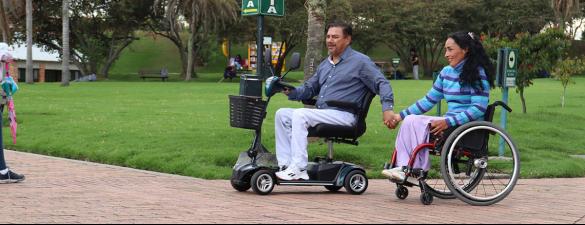
Fatigue and the chances of falling are the main reasons why people after surgery acquire a scooter. Scooters allow for increased independence inside and outside the home and help significantly when carrying out the activities of daily life.
Never forget that any recovery plan will depend on the treatment provided by the specialists and the capabilities of the patient. Always consult with a medical professional. If you need any of these technical aids, please contact your local Loh Medical representative.