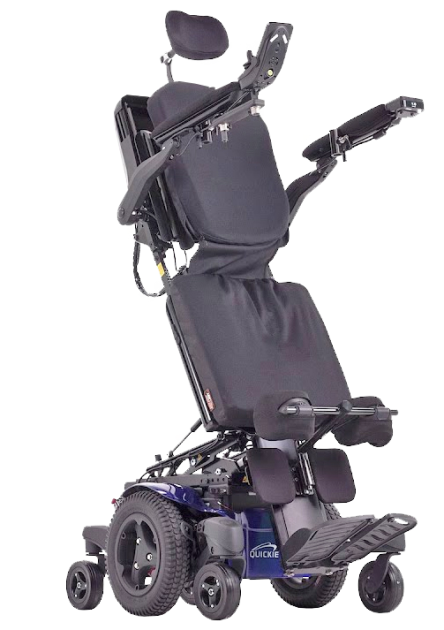
What Are the Benefits of Using a Standing Wheelchair?
Standing Wheelchair
The standing wheelchair is one of the most important innovations in assistive mobility and rehabilitation. This type of device allows users to transition from a seated position to a standing position safely, comfortably, and in a controlled manner.
Beyond facilitating movement, standing wheelchairs have a positive impact on the physical, emotional, and social health of people with reduced mobility. Thanks to their technological systems and ergonomic structures, they help improve circulation, reduce body pressure, and increase independence.
In this article, you will learn how a standing wheelchair works, what its benefits are, and who can make the most of this type of assistive technology.
We invite you to read: Key tips for buying the right folding wheelchair
What is a standing wheelchair?
A standing wheelchair is a mobility device designed to allow the user to change from a seated position to an upright or standing position.
Unlike traditional chairs, this type of wheelchair incorporates special mechanisms that facilitate standing without compromising the user's stability or safety.
The main objective is to promote greater independence and improve physical functions related to posture, circulation, and mobility.
How does a standing wheelchair work?
Standing wheelchairs use different mechanical and technological systems to help the user rise progressively and safely.
Among its most important components are:
-
Electric motors that facilitate elevation
-
Hydraulic systems for smooth movements
-
Adjustable leg and knee supports
-
Chest and waist safety straps
-
Stable and ergonomic footrests
-
Joystick-type controls or smart screens
These elements work together to guarantee comfort, balance, and ease of use.
Main components of a standing wheelchair
|
Component |
Function |
Benefit |
|---|---|---|
|
Electric motor |
Elevate the user |
Safe movement |
|
Leg supports |
Maintain stability |
Greater safety |
|
Restraint straps |
Prevent falls |
Proper posture |
|
Smart joystick |
Control functions |
Easy handling |
|
Adjustable footrests |
Provide body support |
Better balance |
What are the physical benefits of a standing wheelchair?
One of the greatest benefits of the standing wheelchair is its positive impact on physical health. Standing for certain periods can help improve different bodily functions.
Improves blood circulation
The upright position promotes blood flow and helps reduce blood pooling in the legs. This decreases the risk of circulatory complications such as deep vein thrombosis.
Promotes digestion
Standing helps the normal functioning of the digestive system, facilitating intestinal transit and reducing problems such as constipation.
Helps maintain bone density
Weight-bearing on the legs and spine stimulates bone tissue formation, helping to prevent osteoporosis and bone mass loss.
Reduces accumulated pressure
Changing positions decreases constant pressure on sensitive areas of the body, helping to prevent pressure ulcers or bedsores.
What emotional and social benefits does a standing wheelchair offer?
The standing wheelchair not only improves physical health, but it also has a significant impact on emotional and social well-being.
Being able to stand promotes:
-
Greater independence
-
Increased self-esteem
-
More active social participation
-
Better eye-level interaction with other people
-
A sense of autonomy and control
These advantages contribute significantly to improving the user's quality of life.
Benefits of the standing wheelchair
|
Type of benefit |
Impact |
|---|---|
|
Physical |
Improves circulation and posture |
|
Emotional |
Increases self-esteem |
|
Social |
Promotes interaction |
|
Functional |
Increases independence |
|
Preventive |
Reduces pressure ulcers |
Who should use a standing wheelchair?
The use of a standing wheelchair should be recommended by health professionals, as each patient has specific needs.
This type of chair is usually beneficial for people with:
-
Spinal cord injuries
-
Cerebral palsy
-
Multiple sclerosis
-
Muscular dystrophy
-
Stroke sequelae
Additionally, it is important for the user to have a certain level of postural stability and the ability to operate the device's controls.
You may also be interested in: 13 practical steps to always keep your electric wheelchair in optimal condition
What features should a good standing wheelchair have?
When choosing a standing wheelchair, it is important to consider aspects related to safety, comfort, and adaptability.
The most important features include:
-
Durable and lightweight structure
-
Adjustable support systems
-
Intuitive controls
-
Good maneuverability
-
Ergonomic design
-
Customization options
This ensures a more comfortable and safer experience for the user.
How does a standing wheelchair improve quality of life?
The possibility of changing posture during the day has a direct impact on the user's independence and well-being.
The standing wheelchair facilitates everyday tasks such as:
-
Reaching high objects
-
Socially interacting while standing
-
Improving mobility in certain spaces
-
Reducing postural fatigue
Additionally, it helps promote a more active and functional routine.
Q700-UP M Standing Wheelchair at Loh Medical
The Q700-UP M wheelchair available at Loh Medical is a standing wheelchair designed to offer high performance, stability, and comfort.
Among its most outstanding features are:
-
SEDEO ERGO smart seating system
-
Switch-It special controls
-
Customized memory settings
-
Recline and standing function
-
Excellent performance on different terrains
Thanks to its advanced technology, this chair allows for a safer, more comfortable, and independent experience.
The standing wheelchair represents a major breakthrough in assistive mobility and rehabilitation. Its ability to enable the transition from sitting to standing provides physical, emotional, and social benefits that significantly improve quality of life.
In addition to promoting circulation, reducing body pressure, and strengthening bone density, these chairs help increase independence and active participation in daily activities.
Thanks to current technological innovations, standing wheelchairs offer more and more comfort, safety, and customization, becoming an excellent solution for many people with reduced mobility.
If you want to learn more about assistive mobility and specialized equipment, at Loh Medical you will find solutions designed to provide well-being, autonomy, and a better quality of life.