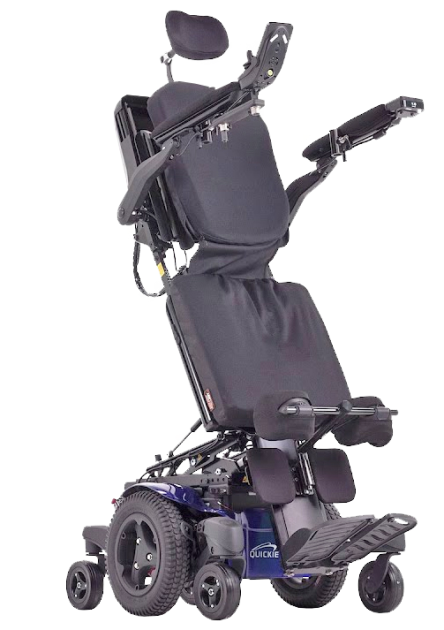
Medical equipment for reduced mobility
Imagine this: you wake up wanting to live a “normal” life, but something as simple as moving from the bedroom to the bathroom, going out to the store, or stepping over a curb becomes a constant negotiation with pain, fatigue, or the fear of falling. For many people with reduced mobility (and for those who care for them), the problem is not just “moving less”: it’s losing independence, limiting routines, becoming socially isolated, and putting the body under repeated physical strain.
The good news is that mobility can be rebuilt when the full problem is understood and the solution is assembled in layers: primary mobility (wheelchair/scooter), prevention and posture (pressure management), environmental accessibility (ramps/grab bars/transfers), and rehabilitation (gait training/strengthening/activity). This holistic view is key, because choosing “a piece of equipment” without considering the context often ends in frustration: the device ends up stored away, feels uncomfortable, doesn’t fit the home, or doesn’t work for the terrain.
In this guide you’ll find a clear thread:
-
what the real problem behind reduced mobility is,
-
how to decide what you need based on your daily life, and
-
what concrete solutions you can implement with Loh Medical products (without unnecessary technical jargon, but with solid criteria).
The problem isn’t just walking: it’s energy, safety, and participation
Reduced mobility is often accompanied by one (or several) of these “blockers”:
-
Fatigue and pain when walking short distances (hallways, supermarkets, medical appointments).
-
Risk of falls due to lack of balance, weakness, or uneven surfaces.
-
Unstable posture while sitting, which worsens over time (hips, trunk, neck).
-
Skin injuries caused by pressure when spending long periods seated without adequate support.
-
Poorly accessible environments: stairs, narrow doors, non-adapted bathrooms, curbs, slopes.
Globally, the WHO warns that assistive products (such as wheelchairs and canes, among others) are essential for independence and participation; however, there is still a very large access gap in many countries.
And when we talk specifically about wheelchairs, the most important recommendation is this: it’s not about “just any wheelchair,” but about a wheelchair that is appropriate for the person and their environment, ideally with evaluation, fitting, and follow-up.
The “layered” solution: a mobility system (not a single product)
For a solution to truly work, think of your mobility as a system:
-
Primary mobility: wheelchair (manual or powered) or scooter.
-
Comfort and prevention: cushions/backrests for pressure management and posture.
-
Environmental accessibility: ramps, grab bars, power assist, lifts/transfers.
-
Rehabilitation and activity: equipment to retrain gait, posture, strength, and confidence.
Loh Medical organizes its portfolio precisely around these needs: wheelchairs, scooters, pressure management, accessibility, and rehabilitation, with options designed for different user profiles.
Step-by-step to choose medical equipment for reduced mobility (without making mistakes)
1) Define your “main scenario” (where your life happens)
Answer these questions:
-
Do you spend most of your time at home or outside?
-
Are there stairs, narrow hallways, slopes, or uneven terrain?
-
Do you move around independently or with a caregiver?
This simple clarity avoids the most common mistake: buying something “just in case” and ending up with equipment that never gets used.
2) Decide your motor: manual, powered, or scooter
-
Manual wheelchair: ideal if you have arm strength (or caregiver support), need precise maneuverability, and require frequent transportation.
-
Powered wheelchair: key if walking or self-propelling exhausts you, if there is pain, or if you want autonomy indoors and outdoors.
-
Scooter: excellent if you can maintain seated posture with stability and want independence for longer trips (shopping centers, neighborhood errands).
3) Secure the foundation: posture and pressure management
If you spend hours sitting, comfort stops being a “luxury” and becomes prevention. A support cushion can help distribute pressure and improve tolerance for long use. For example, Loh Medical offers the OneLoh Cushion, focused on pressure relief, hygiene, and portability.
4) Remove barriers: adapt the environment so your mobility can actually happen
Having great equipment is useless if your home or workplace blocks it. In accessibility, Loh Medical highlights solutions such as ramps, grab bars, bathroom adaptations, and stair lifts designed to increase independence and safety.
Loh Medical solutions by problem (real cases and matching equipment)
Case A — “I can move, but I get tired quickly and every outing feels like a marathon”
Typical signs: pain, fatigue, constant pauses, avoiding going out.
Recommended solutions:
-
Mobility scooter for longer trips without overloading the body.
-
A concrete example is the Elite Traveller Scooter, designed for an active lifestyle, with disassembly into parts and a storage basket.
Expected result: you can run errands and go out with less pain, preserving energy for what really matters.
Case B — “I need a wheelchair to move freely without losing stability”
This is where manual wheelchairs come in according to your lifestyle:
-
If you are active and prioritize responsiveness and maneuverability: a rigid wheelchair like the Coyote A.
-
If you need postural adjustments and position changes throughout the day: an option with tilt-in-space like the Coyote T+.
Expected result: fewer body compensations, better control, and a safer and more comfortable mobility experience.
Case C — “I want full autonomy: indoors, outdoors, and easy control”
When the goal is independence (and walking is no longer viable or is too physically demanding), a powered wheelchair usually becomes the center of the system:
-
Felix R: rigid-frame powered wheelchair with joystick control.
-
Felix RT: includes electronic reclining and tilt functions for more demanding postural needs.
-
Felix E: foldable front-drive powered option designed for transport and storage.
Expected result: you move with less dependence on others and reduce the physical “cost” of every trip.
Case D — “My home blocks me: step at the entrance, unsafe bathroom, difficult transfers”
This case is more common than it seems: the problem is not the body, it’s the environment.
Recommended accessibility solutions:
-
Portable ramps such as SUITCASE or TRIFOLD ramps.
-
Grab bars and anchoring systems for critical areas like bathrooms and hallways.
-
Power assist systems to support mobility on slopes or during fatigue.
-
Patient lifts to reduce caregiver strain and increase safety.
-
Lift chairs that assist with safe standing transitions.
Expected result: your equipment actually fits into your real life, reducing risks and increasing independence at home.
Case E — “I want to recover functions: posture, gait, strength, and confidence”
When the goal is rehabilitation (or maintaining abilities), the system includes training and activity:
-
Options such as gait trainers, walkers, positioning systems, and support equipment.
-
For therapeutic activity and motivation, an adaptive tricycle can improve strength, balance, range of motion, and social participation.
Expected result: progressive improvements, greater tolerance for movement, and a more active role in your own recovery.
Quick checklist (what to review before deciding)
For wheelchairs and scooters
-
Width of doors and hallways at home.
-
Main terrain (smooth, uneven, slopes).
-
Transportation: does it fit in a car? does it fold or disassemble?
-
Desired autonomy (typical daily distances).
-
Need for postural adjustments (recline/tilt).
For pressure management
-
Hours of daily seated use.
-
Sensitivity or history of skin injuries.
-
Ease of cleaning and hygiene.
For accessibility
-
Level changes (entrance, bathroom, steps).
-
Slippery surfaces and required support points.
-
Transfers (bed–chair, chair–bathroom).
Frequently Asked Questions (FAQ)
What medical equipment for reduced mobility is “basic” to start with?
In many cases: a primary solution (wheelchair or scooter) + pressure management (cushion/support) + an accessibility improvement (ramp/grab bars).
Scooter or wheelchair?
It depends on your goal: if you prioritize long distances with minimal effort, a scooter may be ideal. If you need maneuverability in tight spaces or specific postural support, a wheelchair is usually the better starting point.
What do I gain by adapting my home if I already have a wheelchair?
A lot: accessibility removes bottlenecks (steps, unsafe bathrooms, entrances) and ensures the equipment is used daily rather than only occasionally.
Mobility returns when the solution is designed for your real life
The right decision is not “buying the most advanced equipment,” but building the system that allows you to live: move without fear, without unnecessary pain, with good posture, and with an environment that does not hold you back.
If today you’re at the point of “I don’t know where to start,” use this simple rule:
-
If the problem is energy and distance → look at scooters.
-
If the problem is full autonomy → consider powered wheelchairs.
-
If the problem is posture and sitting tolerance → combine wheelchair + pressure management.
-
If the problem is the house → prioritize accessibility (ramps, grab bars, transfers).
-
If the goal is recovering abilities → integrate rehabilitation and meaningful activity.
Sources (Cited)
-
World Health Organization (WHO) – Assistive Technology. (World Health Organization)
-
WHO – WHO/UNICEF report on the need for and access to assistive products (news release, May 16, 2022). (World Health Organization)
-
WHO – Wheelchair provision guidelines (publication, June 5, 2023). (World Health Organization)
-
Loh Medical – Mobility and assistive products (categories and product lines). (lohmedical.com)
-
Loh Medical – Wheelchairs (criteria, benefits, and FAQ). (lohmedical.com)
-
Loh Medical – Electric scooters (benefits and FAQ). (lohmedical.com)
-
Loh Medical – Felix R Wheelchair (description and specifications). (lohmedical.com)
-
Loh Medical – Felix RT Wheelchair (electronic recline/tilt). (lohmedical.com)
-
Loh Medical – Felix E Wheelchair (foldable powered wheelchair). (lohmedical.com)
-
Loh Medical – Coyote A Wheelchair (rigid frame, adjustments). (lohmedical.com)
-
Loh Medical – Coyote T+ Wheelchair (tilt-in-space). (lohmedical.com)
-
Loh Medical – OneLoh Cushion (pressure management). (lohmedical.com)
-
Loh Medical – Accessibility (ramps, lift chairs, lifts, power assist, etc.). (lohmedical.com)
-
Loh Medical – Rehabilitation (gait trainers, walkers, adaptive tricycle, etc.). (lohmedical.com)
-
Loh Medical – Elite Traveller Scooter (portability, disassembly, and key specifications). (lohmedical.com)